
Cloud computing 2025 is hitting different, y’all. Like, seriously, I’m sitting here in my messy home office in California on Christmas Day, sipping cold coffee that’s been sitting since morning, staring at my laptop screen glowing with AWS bills that make me wanna cry a little. I’ve been deep in this cloud stuff for years now, migrating side projects that totally flopped because I forgot to shut down a test instance—left it running for months, oops—and yeah, it’s embarrassing how much I’ve wasted on that. But man, cloud computing 2025 is evolving so fast it’s got me both excited and kinda overwhelmed, like that time I tried to set up a multi-cloud setup and ended up with duplicate resources everywhere.
Anyway, let’s dive in ’cause I’ve got real stories from grinding through this in the US tech scene.
My Chaotic Journey with Cloud Computing 2025 Trends
Cloud computing 2025 trends are all about AI taking over everything, and honestly, it’s bittersweet for me. I remember last summer, out here in the Bay Area heat—AC cranked, fans whirring—trying to spin up some GenAI experiments on Azure, and it was magic until the costs spiked. Like, I thought I was smart using serverless, but nope, forgot to cap it and bam, surprise bill. But the power? Insane. AI integration is everywhere now, with hyperscalers embedding it for auto-optimization.
- Multi-cloud and hybrid setups: I’m running AWS for storage, Azure for AI stuff, and a bit of Google Cloud ’cause their data tools are killer. Avoids lock-in, but managing it? Chaos. I once repatriated a workload back on-prem thinking it’d save money—total mistake, latency killed it.
- Edge computing blowing up: With IoT devices everywhere, processing at the edge feels essential. I tinkered with some smart home gadgets linked to cloud, and the real-time feel is addictive, especially for low-latency apps.
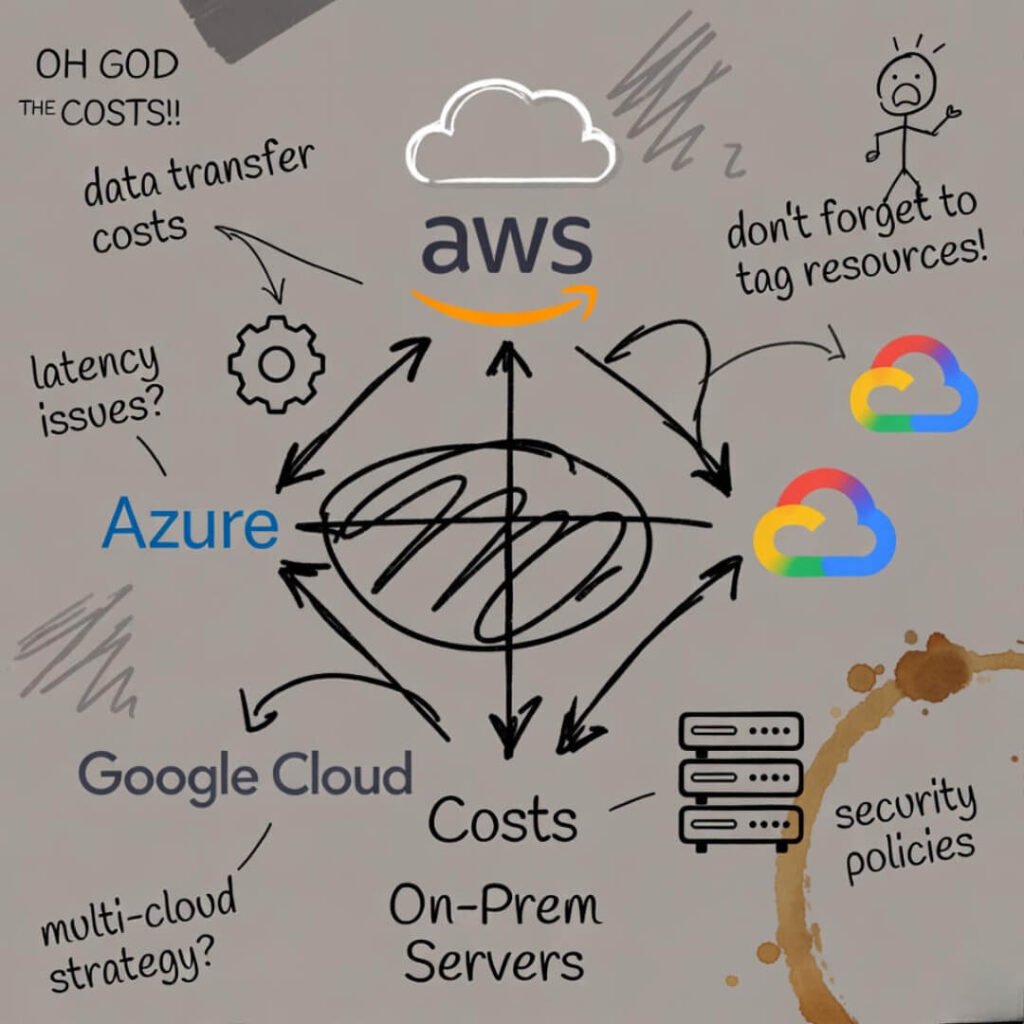
And sustainability? Cloud computing 2025 is pushing green hard, with providers going carbon-neutral. I feel guilty about my old on-prem servers guzzling power in a garage setup years ago—now I’m all in on efficient clouds, though I contradict myself by running unnecessary GPUs sometimes.
Top Tools I’m Actually Using in Cloud Computing 2025
The tools in cloud computing 2025 are lifesavers, but I’ve screwed up with plenty. AWS still dominates for me—EC2 for compute, S3 for storage—but Azure’s catching up with their AI integrations. Google Cloud’s BigQuery saved my butt on a data project recently.
- Serverless options like AWS Lambda: Perfect for sporadic tasks, no server management. But I once built a chain that looped infinitely—bill nightmare.
- Kubernetes for orchestration: Running containers across clouds, but learning curve? Steep. I pod-crashed so many times early on.
- FinOps tools emerging: With costs exploding from AI, dedicated teams are tracking waste. I’m using basic ones now after that embarrassing overage.
Quantum-as-a-service is popping up too—tried a demo on IBM’s cloud, mind-blowing for complex sims, but way over my head still.
The Innovations in Cloud Computing 2025 That Surprise Me Most
Innovations in cloud computing 2025? Quantum cloud access is wild— no need for your own hardware. And edge-AI hybrids for real-time stuff, like autonomous systems. Security’s ramping with zero-trust, ’cause breaches scare me after a close call on a freelance gig.
Market-wise, it’s booming—over $900 billion already, heading to trillions. But outages happen; remember those big ones this year? Made me diversify quick.
I digress, but yeah, from my flawed US perspective—dealing with West Coast internet flakes and holiday distractions—cloud computing 2025 feels cautiously thrilling, like it’s empowering small hustlers like me but also risky if you zone out.
In wrapping this chatty ramble, cloud computing 2025 has taught me humility through epic fails, but the insights? Priceless. If you’re dipping in, start small—maybe audit your bills first, like I wish I had sooner. What’s your biggest cloud headache right now? Drop a comment, let’s talk it out. Seriously, hit up some free tiers on AWS or Azure today—you won’t regret it. Or maybe you will, like I did at first, haha.
